We use cookies to make your experience better. To comply with the new e-Privacy directive, we need to ask for your consent to set the cookies. Learn more.

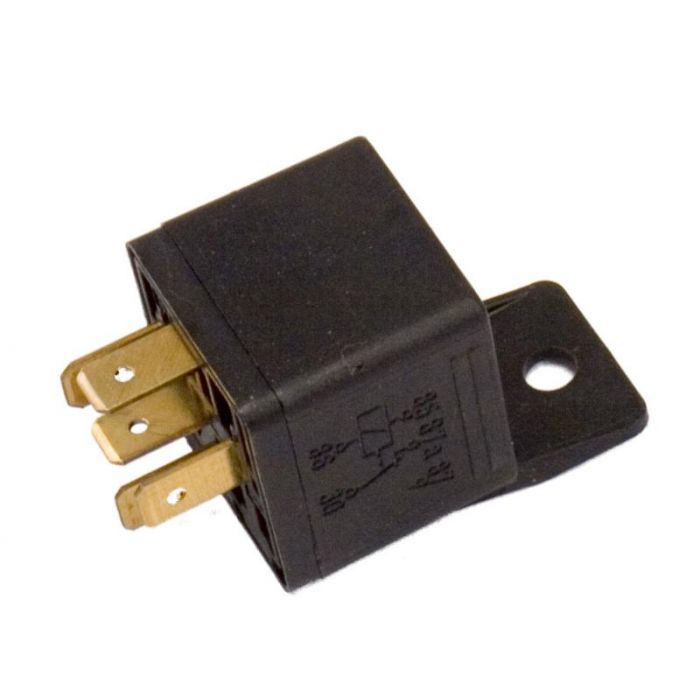
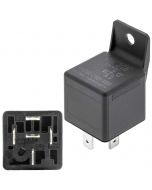
Tyco formerly Bosch 5080 12 VDC Automotive 5-Pin Relay SPDT 20/30A Plastic tab
$6.99
Out of stock
SKU
30848

Expert Knowledge
Talk to a specialist
- Durable design built by Bosch (Tyco) automotive electronics
- 20 amp / 30 amp rated contacts
- SPDT - Single pole dual throw
Unit includes: 12 volt relay
Tyco formerly Bosch 5080 12 VDC Automotive 5-Pin Relay SPDT 20/30A Plastic tab
Tyco formerly Bosch 5080 12 VDC Automotive 5-Pin Relay SPDT 20/30A Plastic tab
This Bosch type 12V, 20A/30A relay is popular in automotive sound and security installations. It easily switches 20 amps of current and peaks of 30 amps with minimal draw on the coil of 136 milliamps @ 12Vdc. It features a plastic tab with plastic housing. Single Pole, Dual throw for flexible installations and multiple uses.
-
Features:
- Durable design built by Bosch (Tyco) automotive electronics
- 20 amp / 30 amp rated contacts
- SPDT - Single pole dual throw
- 12 Vdc rated coil with minimum 8 volt to trigger
- Power consumption @ 12Vdc 136 mA
- Conventional 87, 87a, 30, 86, and 85 pin locations
- Compatible with most insulated and non insulated terminals and relay sockets
- Dimensions 1 1/8" (w) x 1 1/4" (D) x 2" (H) with terminals and tab
- Pin configuration:
- Pin 86 - Coil
- Pin 85 - Coil
- Pin 30 - Common Pin
- Pin 87a - Normally closed pin
- Pin 87 - Normally open pin
| Manufacturer | Bosch |
|---|---|
| Part Number | 5080 |
| Operation Voltage | 8-15 Volt DC |
| Relay type | Full size 5 Pin relay |
| Current capacity | 20 Amp / 30 Amp |
| Pole switching type | SPDT (Single pole Dual throw) |
| Tab type | Plastic Tab |
| Waterproof ingress protection | None |
| Warranty | 1 Year |
| California Proposition 65 | |
| Return period | 30 days |
| Exchange period | 30 days |
Write Your Own Review
Relay Pinout Diagrams Explained
A relay pinout diagram shows the function of each terminal (pin) on a relay and how the internal connections work. It helps you wire the relay correctly for your project.
1. Basic Relay Anatomy
Most automotive relays have two main parts:
- Coil – An electromagnet that switches the relay on/off (low current side)
- Switch Contacts – The high-current switch that turns your accessory on/off
2. Most Common Automotive Relay: 5-Pin SPDT
This is the standard relay type used with sockets like BRSCN, BRSPC, BRSS, etc.
| Pin | Name | Function |
|---|---|---|
| 30 | Common | Power input (goes to the load) |
| 87 | Normally Open (NO) | Closed when relay is energized (ON) |
| 87a | Normally Closed (NC) | Closed when relay is de-energized (OFF) |
| 85 | Coil Ground | Negative side of coil |
| 86 | Coil Positive | Positive side of coil (+12V trigger) |
Visual Pinout Diagram
          87
          │
   87a ───┼─── 30
          │
         [Relay]

   85 ───────── 86
How It Works:
- No power to 85/86 → Current flows between 30 and 87a
- +12V applied to 85/86 → Coil energizes → Current flows between 30 and 87
4. How to Read a Relay Pinout Diagram
Most relay pinout diagrams include the following elements:
- A box or outline representing the relay body
- Pin numbers clearly labeled next to each terminal
- Internal connections shown with lines or dotted lines
- Coil symbol (usually a rectangle or spring-like coil)
- Switch contacts shown with an arrow indicating movement when the relay is energized
Example Relay Pinout Diagram:
       87          30
        │           │
        └──────┬────┘
               │
             ┌──┐     ← Moving Contact
             └──┘
            /     \
          87a      (Switches when coil is energized)

    85 ───────────── 86
          Coil
Understanding the Symbols:
- 30 — Common terminal (input power)
- 87 — Normally Open (NO) contact
- 87a — Normally Closed (NC) contact
- 85 & 86 — Coil terminals (control side)
When the relay coil is energized (pins 85/86 powered), the internal switch moves from 87a to 87.
Quick Wiring Examples (5-Pin Relay)
1. Basic On/Off Circuit (Most Common)
Used for lights, fans, fuel pumps, horns, etc.
- 86 → Switched +12V (from switch, toggle, or ECU output)
- 85 → Ground (or switched ground)
- 30 → Constant +12V Power (from battery or fuse box)
- 87 → Output to Accessory (lights, fan, etc.)
- 87a → Not used (leave disconnected)
2. Changeover / Dual Circuit Setup
Use both 87 and 87a when you need to switch between two different circuits.
- 30 → Input Power
- 87 → Circuit A (ON when relay is energized)
- 87a → Circuit B (ON when relay is OFF)
- 85 & 86 → Coil control
3. Typical Pin Connections Summary
| Pin | Connection | Typical Wire Color | Purpose |
|---|---|---|---|
| 30 | Constant +12V | Black (BRS14E & BRS12E) | Power Input |
| 87 | To Accessory | Green (BRS14E & BRS12E) | Power Output (ON) |
| 87a | Optional 2nd Circuit | Blue (BRS14E & BRS12E) | Power Output (OFF) |
| 85 | Ground | White (BRS14E & BRS12E) | Coil Negative |
| 86 | Switched +12V | Red (BRS14E & BRS12E) | Coil Positive |
Tip: Always use a fused power source on pin 30 for safety.
Basic 5-Pin Relay Wiring Harness
Battery +12V ──► [Fuse] ──► Pin 30 (Common)

Pin 87 ──► Accessory (Lights / Fan / Pump / Amp etc.)

Pin 86 ──► Switched +12V Trigger
               (from switch, headlight wire, remote turn-on, etc.)

Pin 85 ──► Ground

Pin 87a ──► (Optional - Not used in basic setup)
Recommended Wiring (Empty relay socket or spade connectors (Not BRS14E & BRS12E):
- Pin 30 — Red wire with inline fuse (closest to battery)
- Pin 87 — Red or Blue wire to device
- Pin 86 — White or Pink trigger wire
- Pin 85 — Black ground wire
Dual Output (Changeover) Relay Harness
Pin 30   → Constant +12V (Fused)

Pin 87   → Circuit A (ON when relay activated)
Pin 87a  → Circuit B (ON when relay is off)

Pin 86   → Trigger +12V
Pin 85   → Ground
Customer Questions
Related Products
Check items to add to the cart or

We found other products you might like!